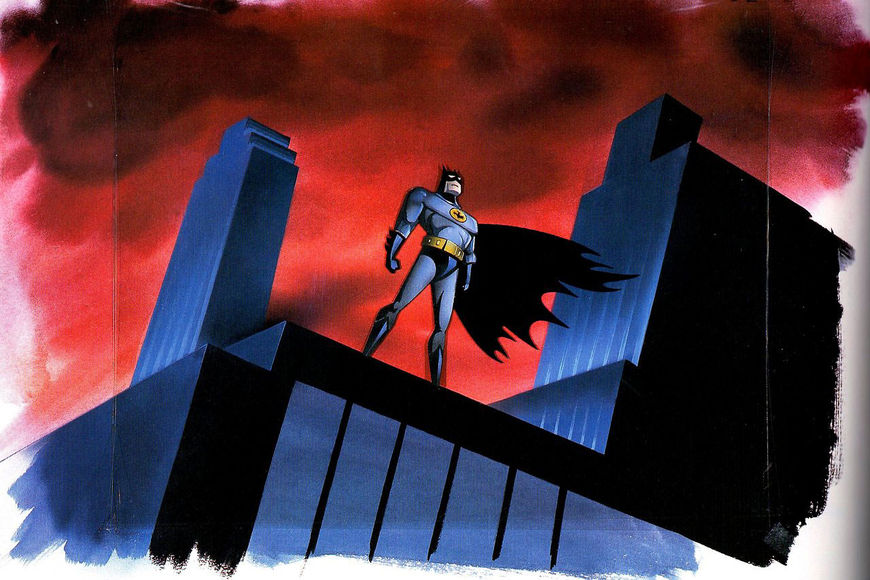
~ my review of Batman: The Animated Series (1992-1995) & the character of Batman.
I Am Batman (Again)
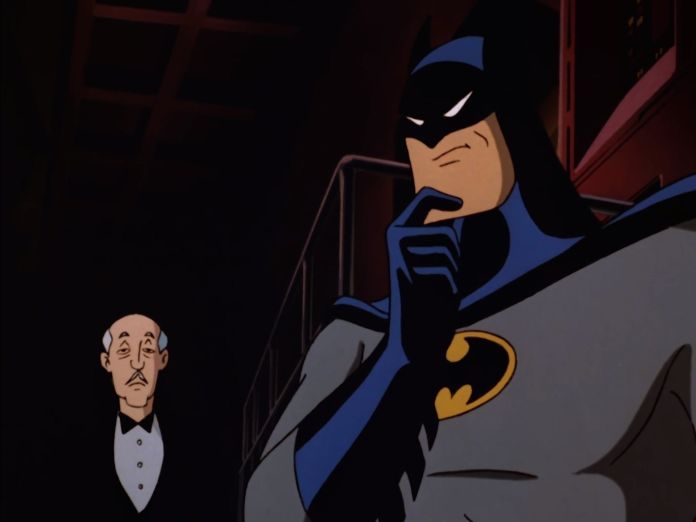
Rewatching Batman: The Animated Series (BTAS) 30 years later is an exercise in reaffirmation. For long considered to be one of the greatest American animations, many a Batman fan would call the series the quintessential experience of the iconic character. Back in the 90s, BTAS was how many millennials (such as myself) were introduced to Batman and the Bat-mythos in earnest. Created as an expansion of the momentum from the hyper-popular Tim Burton x Michael Keaton Batman films in ‘89 and ‘92, BTAS takes on the art deco Gotham aesthetic from those films as well as the wondrous stylings of Danny Elfman’s bombastic musical theme.
For me, what I love about BTAS sums up to about the same expression I could make on the 90s Spider-Man animated series: they are *complete* explorations. Not just of the main character of Batman, but his world, his villains and allies and capabilities, top to bottom. This means we get the full run, from superhero origins to story arcs arrayed against a vast rogues’ gallery and the archetypal and literary factors that make these figures the icons that they are.

Why does Batman exist? How does Batman win? Who is Batman and whom does he fight?
Batman does not kill.
Batman never, ever gives up.
Batman cares about everyone in Gotham, even and especially his maniacal foes.
Through the convicted vocal stylings of the late great Kevin Conroy (the definitive animated & digitized Batman) and a certain cinematic appeal to each of the 30-minute capers he takes part in, the viewer of Batman in animation (truly from 1992 to present) is sure to receive cerebral gold from underneath that cape and cowl.
Detective Comics
Batman stories are truly detective stories. He grapples over rooftops and breaks burglar bones, sure, but Batman is ultimately a detective (as Ra’s al Ghul ominously calls him). That means he is an agent of crime and punishment. There is a search for evidence and a progression of clues, deductions, red herrings, sometimes terrifying betrayal, and often a shocking revelation at the core of the case. Bruce Wayne himself was orphaned by back alley crime as a child; he thus makes it his mission as Batman to battle against crime for the sake of all of Gotham and the memory of his parents.
The writing & cinematic direction of BTAS remains consistently superb throughout the saga (including each of the spin-off series). A variety of writers and directors, most notably Eric Radomski, Bruce W. Timm, and Paul Dini, took part in crafting the seasons and stories. Batman’s animated capers range from detective procedurals to incandescent mind-benders to volcanic action encounters, always with one of Gotham’s illest, most psychotic cats at the heart of the matter. (Like Selina Kyle, Batman’s sexy counterpart Catwoman: part-time femme fatale & part-time lover).

Created in 1937, Detective Comics (the namesake of the company DC) was a run that introduced Batman and visual stories of a darkly mysterious and noirish nature for children. Noir was a genre popular in the 1930-50s dealing with drunkard private detectives and amoral femme fatales on the run, running out of time, sometimes losing their minds. Noir is a genre that has influenced much and modern moviegoers can recognize the aesthetic when they see it. But it was also a genre for adults, loaded with crime and cruelty, violence and sex.
Batman introduces the cool capers of a *lite* noir tale in a heightened universe of genius intellect, super crooks, and the peaks of physical perfection. To pair with a noir sensibility, *horror* remains a commonplace tactic throughout BTAS. The saga features many body horror icons such as Two-Face, Clayface, Man-Bat, Bane, and werewolves and various mutant beasts as primary foes for Batman to wrestle against. Scarecrow and his fear toxin terrorism induces some of the best audiovisual horror sequences of all.

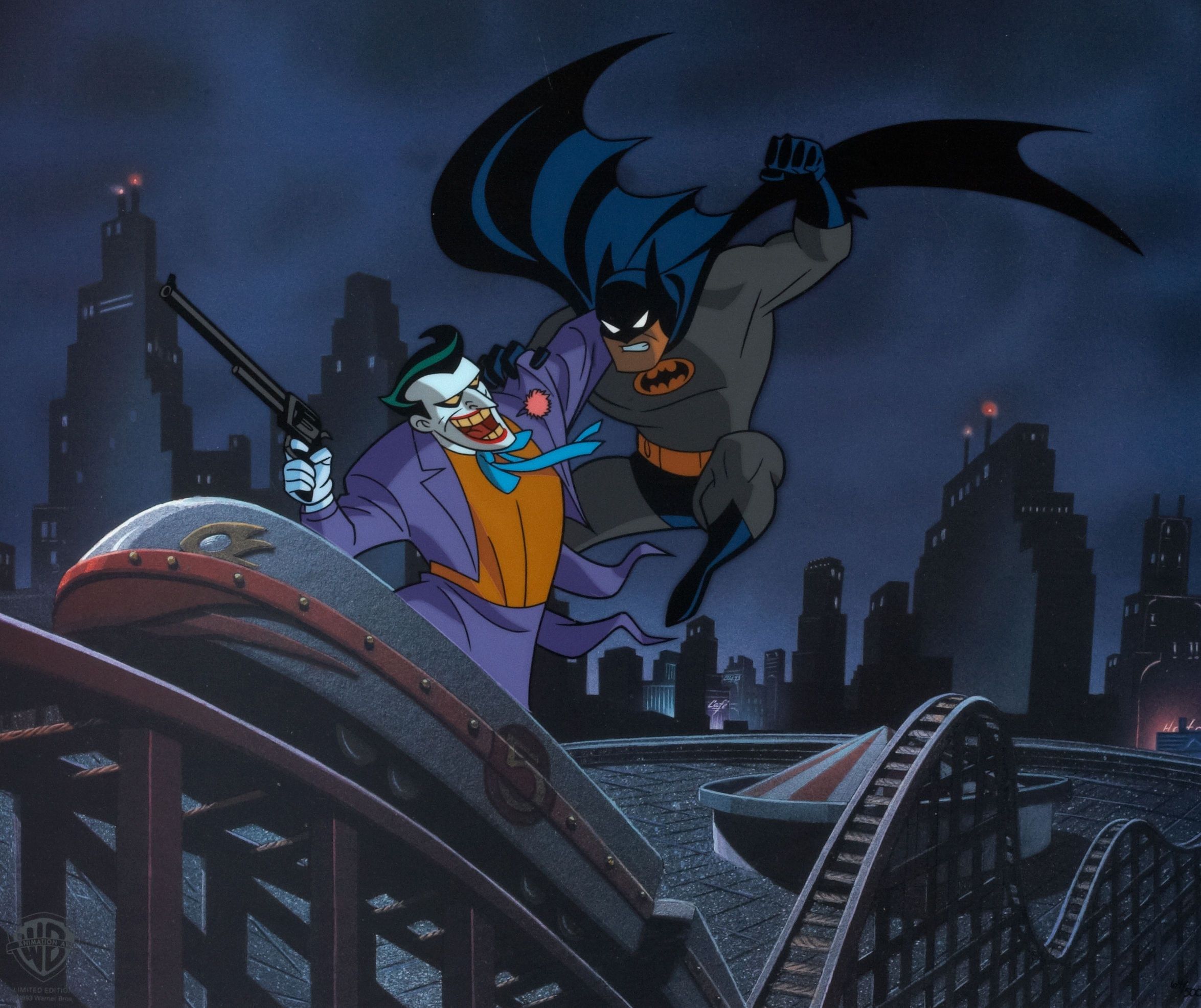
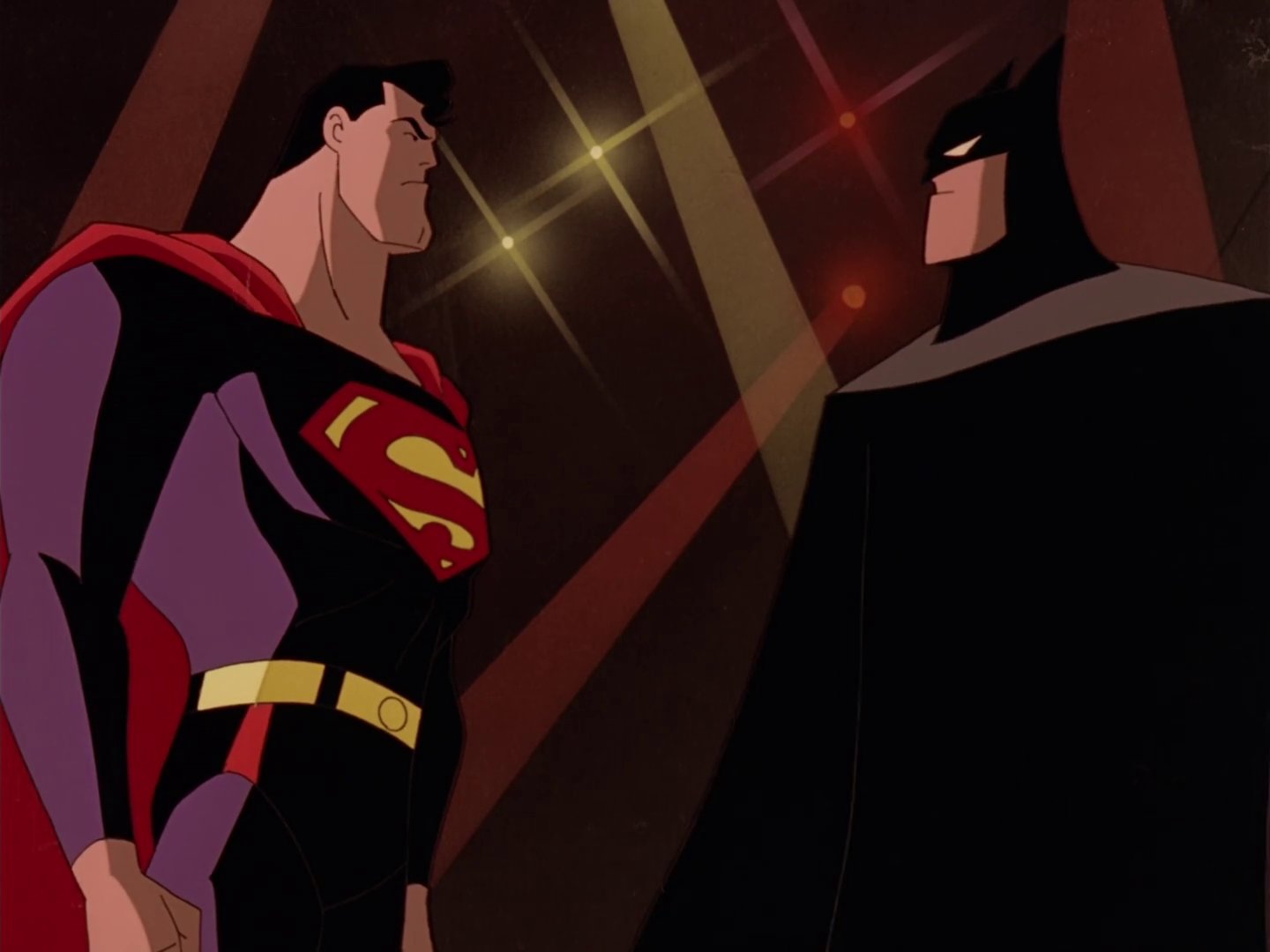
BTAS gives us rich adventures throughout the Batman mythos. All the major villains get multiple episodic arcs, with complex encounters that display their dialectic with The Dark Knight (especially you, Mr. J). Jim Gordon and Catwoman feature often as allying counterparts to Batman’s crusade, sometimes aiding and other times complicating. In The New Batman Adventures, as a cooperative saga to BTAS, we get to see the triumphs and turmoil of the extended Bat-Family with OG Robin Dick Grayson, Batgirl Barbara Gordon, and neo-Robin Tim Drake all receiving time to shine as classic sidekicks. (No one has forgotten you Alfred, you are simply part of Batman.) Greater fantastical elements are introduced as the series crosses over with Superman in the other major DC animated show Superman: The Animated Series. I would mark “World’s Finest” as one of the best episodes of either Batman or Superman. (“Girl’s Night Out” featuring Batgirl and Supergirl teaming up is another great standout in the 90s DC animated mythos).
BTAS as a whole is fast, furious, and full of ambitious and enterprising episodes. Stories can range from errant intellectual hijinks to truly tragic villainous transformations and harrowing gauntlets of heroic sacrifice from Bruce Wayne and his bat-based entourage. In the action animation especially, as well as the gadgets and voice acting, one can easily see the groundwork for the Arkham video game series (2009-2015).
For any writers out there looking to try their hand at penning some phantastical detective stories of their own, Batman is a great place to start learning the ropes.
Batman’s Greatest Strength is Empathy

Batman deals in as heavy of themes as there are in modern comic stories. More grounded, dark, and willing to deal in relatively realistic terror of living in a high-crime environ, Batman focuses on just that: Crime. Crime is a product of society; it is tangible, visible, and affects us all, even if we do not realize it. The reasons for why criminals originate is something to be studied, stopped, and solved if possible. Everyone living in society has some interest in this dynamic.
Many BTAS episodes deal with such urban x crime x drama cases: murder, theft, false identity, corporate malfeasance, dirty cops, mad science, municipal corruption, parental neglect, partner abuse, political coups, terrorism, and more. Regardless of your political polarity, *major crime* ~ and the many conflicting sins of the citizenry, both the powerful and dispossessed ~ are something that the people of any given urban zone must face up with. BTAS pushed the boundaries of children’s entertainment by bringing profound metaphysical questions about philosophy, justice, and vigilantism to the table.
What kinds of maladies and daemons are we producing in modern society?
Who is creating chaos and who wields the tools to restore order?
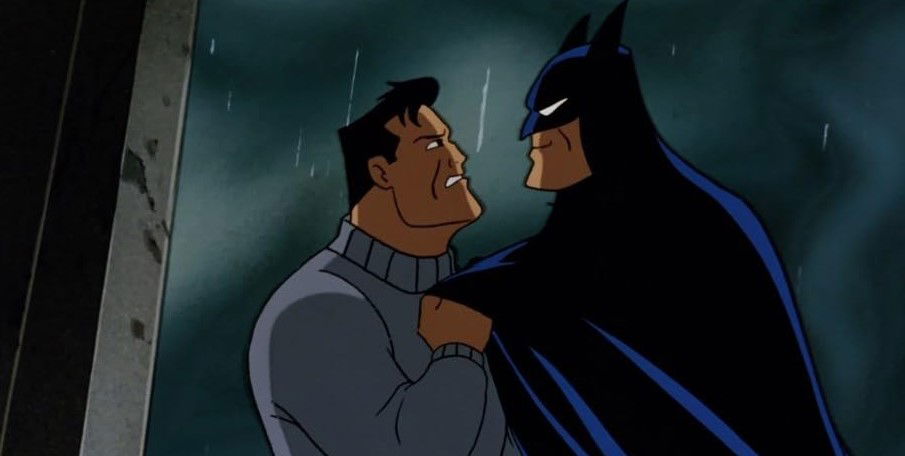
Many may call Batman a fascist ideal, a capitalistic countervailing force against the rebellious violence and survival activity within a deeply unjust system. Remember that Bruce Wayne is a billionaire, with a B. Batman works with cops and is an instrumental agent of the criminal justice system of Gotham City. Some folks, in-universe or IRL, say that Batman himself willfully creates all his villains and is the most insane psycho in all of Gotham. These views can be entertained but also debunked within the character’s canon.
A true reading of Batman requires an empathic connection with what intentions drive him and how his actions alter the fates of those within Gotham. BTAS provides us with a Bruce Wayne that is hardened, calculating, and yet not without wit and charisma and a cunning curiosity for understanding the heart of any given issue, whether interpersonal or empirical. What makes Batman a hero is not his non-lethal crime-fighting by nature, but the methodology for why he dons the cape and cowl in the first place. He wants no one to experience what he has suffered: the death of loved ones at the hands of criminals roaming free and comfortable.
In the comics, as in BTAS, Gotham is a place of ever-encroaching chaos. Crime is rampant, people live in fear. Corruption is bursting at the seams of the metropolis and the police (and lawyers) are firmly a part of the problem. Criminals live in fearless glory, becoming more ambitious with every brazen act. Bruce turns to vigilante justice as a way of transcending the corruption, and the aged and outdated norms of modern crime fighting. This includes breaking the law himself. And it includes going after not just street thugs and psychopaths but the rich and powerful industrialists and technocrats as well. By honing himself into a vessel for absolute justice and becoming *one of them*, Batman can challenge and intimidate the criminal element into submission. Though he may not set out for it, initially primarily involved with striking fear into criminals and committing vengeance against the world’s darkness, Bruce Wayne must eventually realize the role of paragon that he plays for the people of Gotham.
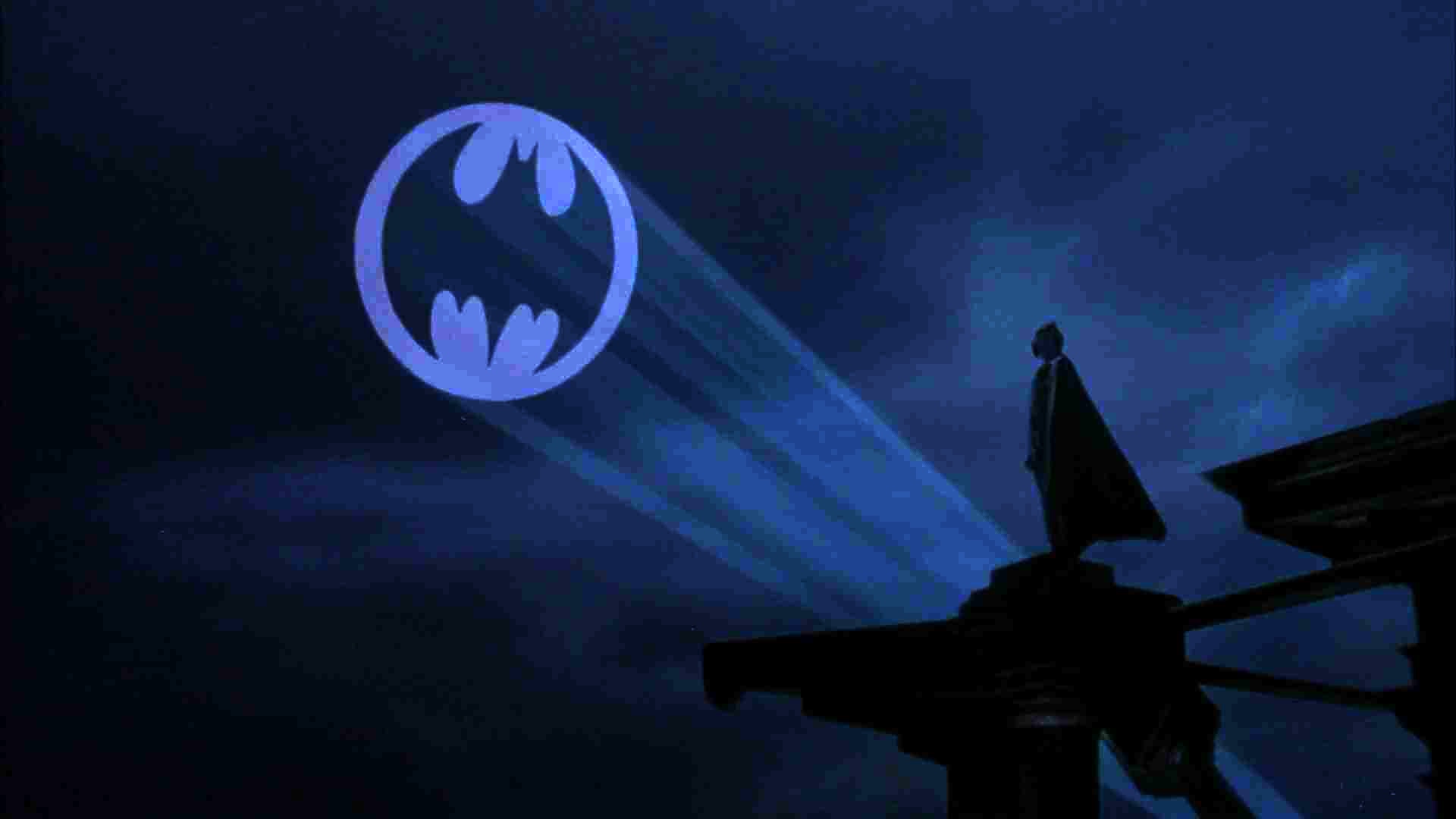


Batman ultimately gives Gothamites hope.
There is a pathos to Bruce and not just because he is the product of tragedy. Bruce’s sense of protective justice is simple in that he will never take a life in pursuit of it and is willing to die to complete that mission. Batman’s immaculate strength and intelligence are just the tools he needs to do the job; Bruce’s true power lay in his empathic connection to other human beings, especially the criminal element. He can stop Joker and Two-Face and Scarecrow from destroying Gotham because he knows what makes them tick. And he is willing to delve into their daemons right alongside them.
Bruce Wayne certainly carries his own weight in trauma, a kind of bat-based psychosis, but the difference is that he channels that chaotic energy into the fight for truth, justice, and order. Batman juggles battling his rogues into surrender and not death, while also evermore counting on them to doom themselves with their own wayward desires and voracious egomania.

Read: Batman Gambit ~ “a plan that revolves entirely around people doing exactly what you’d expect them to do.”
One may only pull off a Batman Gambit if you have empathy for the one you must gambit against.
In Conclusion, I Am The Night

Batman as a crime-fighter is a vital player in the peace, prosperity, and security of the community. Batman as a symbol must come to represent an all-encompassing force of actionable, and preventative, power over the criminal element within Gotham City. He is a mythic force, of fear but also for life and change and potential restoration.
In his own way, Batman becomes a guardian for the prospect of redemptive justice and the giving of criminals, or just people, a second chance at a life beyond their past. Selina Kyle, Kirk Langstrom, Harley Quinn, Poison Ivy, Talia Al Ghul, and Arnold Wesker are just some examples of rogue Gothamites willing to turn the corner (at least for a little while).
Batman never gives up on the mission. But Batman never gives up on people either.
Batman: The Animated Series reveals such truths about the character of Bruce Wayne, always with the zealous grace delivered from the voice acting performance of one Kevin Conroy. Rest in peace, king. ~
Dylan’s Top 13 Batman: The Animated Series episodes:
- Joker’s Favor ~ When a timid accountant accidentally runs afoul of the Joker, he promises the Joker anything if the villain will only let him go.
- Dream of Darkness ~ Batman must thwart the Scarecrow’s plan to poison Gotham’s water supply with a chemical that induces hallucinations.
- The Demon’s Quest ~ When Robin is mysteriously abducted, Batman’s search leads him to Ra’s Al Ghul, leader of the Society of Shadows.
- Feat of Clay ~ Clayface learns that the man responsible for his disfigurement is promoting a skin conditioner containing the same chemical that deformed him.
- What is Reality? ~ To prove that he has a superior mind, the Riddler lures Batman into a contest inside a virtual reality computer game.
- Beware the Gray Ghost ~ Batman connects a string of bombings to an episode of the old television series “The Gray Ghost”, and seeks the aid of the show’s washed-up star in deducing the bomber’s identity.
- Perchance to Dream ~ Bruce Wayne wakes up to find that his parents are not dead, he is not Batman and he’s engaged to Selina Kyle.
- Night of the Ninja ~ When Wayne Enterprises is robbed by a mysterious figure known as the Ninja, Batman and Robin discover that the Ninja is an old nemesis of Bruce Wayne.
- Blind as a Bat ~ Bruce Wayne is temporarily blinded when the Penguin steals a new police helicopter with weaponry developed by WayneTech.
- Harley and Ivy ~ Harley Quinn has broken off with the Joker and teams up with Poison Ivy. Together they wreak havoc on Gotham.
- If You’re So Smart, Why Aren’t You Rich? ~ When Edward Nygma’s greedy boss unjustly fires genius him, Nygma seeks revenge in a new guise – as the Riddler.
- The Forgotten ~ When men begin disappearing at a bowery, Bruce Wayne decides to go undercover as a worker.
- Christmas with the Joker ~ On Christmas Eve, the Joker kidnaps Commissioner Gordon, Harvey Bullock, and Summer Gleeson, then challenges Batman and Robin to find him before midnight.

 Thresholds of Transformation