~ my commentary and analysis on Pope Leo XIV’s 2026 Encyclical letter.
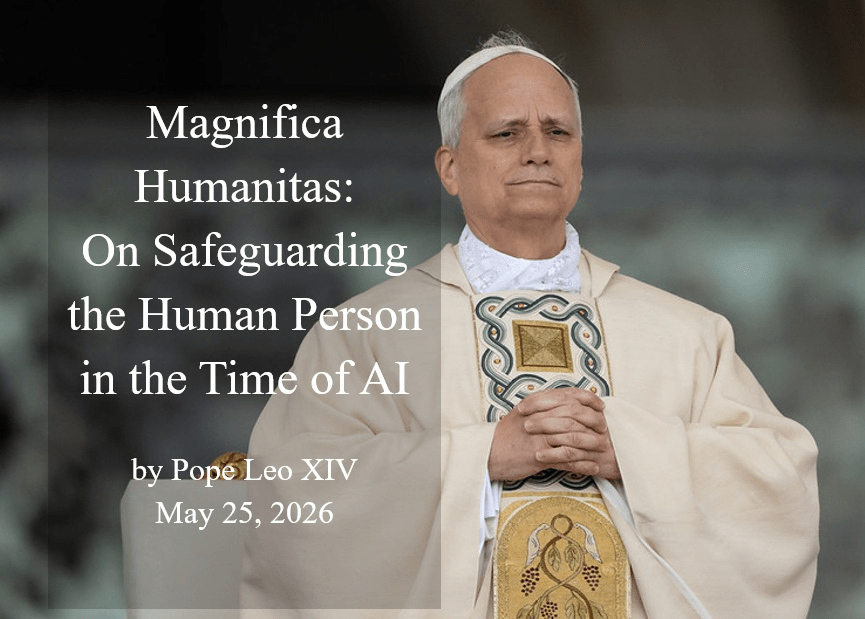
I decided to read Pope Leo’s recent Encyclical, wherein he provides worldly commentary as the head of the Catholic Church. It is titled Magnifica Humanitas (Magnificent Humanity) and subtitled “On Safeguarding the Human Person in the Time of Artificial Intelligence.”
ENCYCLICAL LETTER:
MAGNIFICA HUMANITAS
OF HIS HOLINESS
POPE LEO XIV
ON SAFEGUARDING THE HUMAN PERSON
IN THE TIME OF ARTIFICIAL INTELLIGENCE
Link: https://www.vatican.va/content/leo-xiv/en/encyclicals/documents/20260515-magnifica-humanitas.html
Pope Leo XIV has been very active on Twitter/X recently as @Pontifex, making sweeping and downright Baudrillardian proclamations on the state of our ersatz techno-reality and our swift society-wide descent into A.I. psychosis.
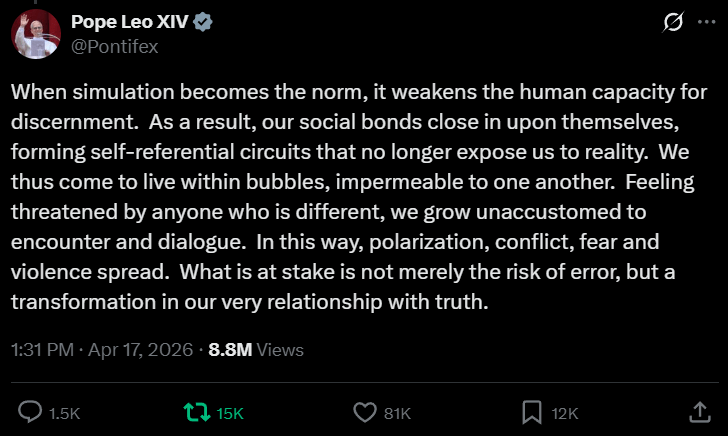
I have been paying close attention, reading his words and reflecting on them.
Why? Because so few modern leaders, of religious, corporatocratic, or governmental natures, seem to be willing to actually give a damn about what is going on anymore. Money and land and *attention* have so long been worshiped as society’s sole ends that there are no longer any other opposing perspectives of elaboration beyond the spiritual dimension.
In sum: There is no moral leadership in our day and age. Zero moral clarity. Might makes right and everyone is trying to get rich at the expense of everyone and everything around them. There is practically no one in power with a positive vision of the future outside of endless growth capitalism and stock-market-based technocracy. There are almost no large voices calling out with reasonable temperance about the direction of our economies and governments and world-shaking technological eschatologies.
As an intelligent citizen, this is continuously disconcerting to me for obvious reasons. And while I have my own issues and critiques with the Catholic Church and their history, I must commend Pope Leo XIV speaking up — and doing so with divine clarity — about the modern dilemmas of technocratic acceleration passing humanity by. Sure, we all live in the muck; we must watch the waters be poisoned and animals die; the permanent underclass is coming; the Backrooms lies beyond all our old walls, waiting to no-clip you there forever…I digress.
I must heed voices like the Pope’s — and implore you do as well, fair reader — because I find the truth inside his words. The Pope and the Christian teachings necessarily operate on a separate, supernal logic that transcends market capitalizations and market efficiencies. It seems clear to me, raised Catholic and now indiscriminately spiritual & a supporter of Jesus, for long agnostic toward the backbone truth of God or an afterlife, that only this super-natured consciousness can pierce the veil on modernity’s material dilemmas.
In other words, I reckon we should be thinking more about the soul of things, the spirit of our society, the core of our being — past, present, and future.
We need moral clarity as a species, transcended beyond all questions of capitalistic competition and the compulsions of super-production and super-profits. The questions are simple: What kind of world as we building? Are we doing a good and balanced job? Do we still care about other people and animals and our environs? Do we still care beyond ourselves, about our children, future generations, the worlds we shall never see?
From the perspective of The Holy See’s long history of surveying global transformative change — and from the teachings of Christ — Pope Leo navigates the moment here with sublimely articulate writing. He covers a vast history of Encyclicals during past labor crises and wars, expounds on the role of the church in social justice, and provides his own graceful and godly perspective on every major issue facing today’s world.
His letter is long and wide-ranging, but I have selected a top 20 quotations to highlight and comment upon here from my own perspective, all in chronological order. I think it is important for everyone to participate in this societal conversation. Altogether, I wish to aid in Pope Leo’s efforts of communicating the stakes of our present moment awareness; Christian or not, his words carry weight and power and truths worth pondering.
I hope you enjoy this transmission and beseech you to read Leo’s full letter in your own time. ~
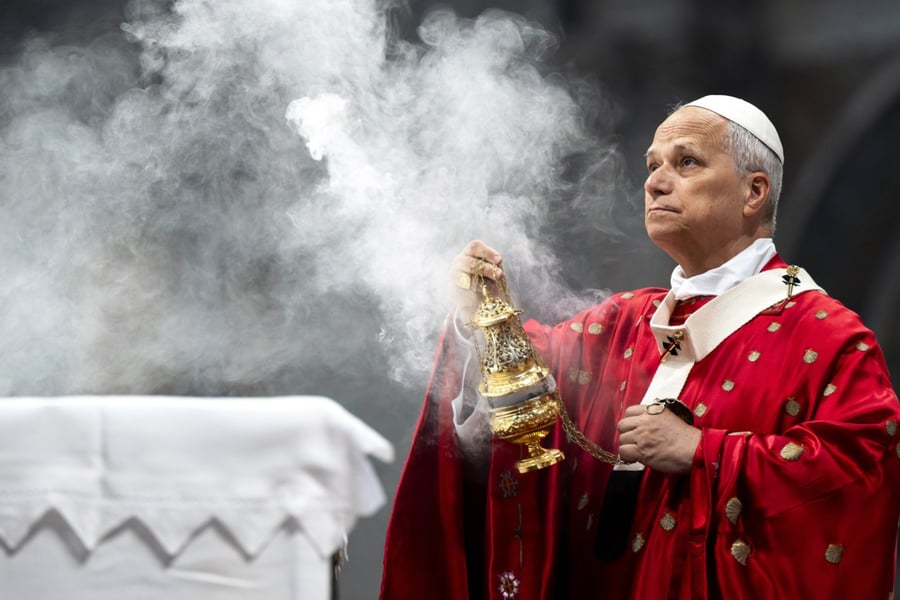
#20 — Opening Line: A Pivotal Choice
1. Humanity, created by God in all its grandeur, is today facing a pivotal choice: either to construct a new Tower of Babel or to build the city in which God and humanity dwell together. Each generation inherits the task of shaping its own era, of guiding history to become a place where the dignity of every person is safeguarded, justice is promoted and fraternity is made possible. Yet every era also runs the risk of creating an inhumane and more unjust world. Whenever humanity is in danger of marring its true identity, we Christians lift our eyes to the Incarnate God, knowing that it is “only in the mystery of the Word made flesh that the mystery of humanity truly becomes clear.” [1] In Jesus Christ, this humanity in its grandeur becomes the Way, the Truth and the Life, opening the path for each of us to grow toward fullness.
~ Pope Leo uses a pair of core Old Testament Biblical analogies to communicate his concerns about the power of our modern moment; the construction of Artificial Intelligence superstructures can result in another Tower of Babel debacle, where humanity becomes divided and conflicted — or it can be something that brings people together, like when Nehemiah carefully rebuilt the city of Jerusalem.
The impetus of the letter comes off the belief that the church should have something to say about society-wide transformations regarding A.I. development, the future of work, and continuity of mass exploitation and armed conflict around the globe. But furthermore, Pope Leo also makes clear that this is the responsibility of every person living in today’s generations, their task of justly “shaping the era” already inherited by way of your existence and present moment action.
The Incarnate God of Jesus Christ is the Christian answer for salvation, a paragon model to always return to. What is your paragon, citizen? If you don’t have one, it is best to start thinking about it. Clearly, humanity needs a model and is in danger of losing its character without one. // Do we want that model to be A.I.? Is that the new god we wish to follow into the future? Food for thought.
#19 — Call for Balanced Regulation
5. It now falls to us to face the challenges of our time with clarity of thought and responsibility. It is necessary to establish adequate regulatory tools capable of upholding justice and curbing the distorting effects of technological power. Nevertheless, the issue is not limited to regulation. As Pope Francis warned, we must realistically ask ourselves who holds this power today and how they use it: “It must also be recognized that nuclear energy, biotechnology, information technology, knowledge of our own DNA, and many other abilities which we have acquired… have given those with the knowledge, and especially the economic resources to use them, an impressive dominance over the whole of humanity and the entire world.” [7] In the past, it was largely up to the State to guide and direct innovation. Today, however, the main drivers of development are private, often transnational, parties that are endowed with resources and the capacity to intervene that surpass those of many Governments. Technological power thus takes on an unprecedented, predominantly “private” aspect, which makes it even more challenging to discern, govern and direct such power toward the common good.
6. For this reason it is necessary to begin a shared discernment process for identifying the spiritual and cultural roots of ongoing transformations. If we focus only on contingencies, we risk letting the succession of emergencies dictate the direction of our path. We are living through a rapid phase of transition, a “change of era,” in which — while some are vying for the future of new technologies and others dedicate themselves to reflecting on the matter — most people are watching and waiting, observing from afar and merely hoping for the best. For this very reason, crucial questions impose themselves on our conscience and can no longer be avoided: Where are we going? Toward what goal do we wish to orient ourselves? What direction should we choose as a people and as a human community?
~ To unbury the lede, the Pope is effectively calling for more reasonable regulation around the development of A.I. Not only that, he demands discernment from the entire sociopolitical landscape about the furtherance of other distortions and dilemmas laden throughout our world — including war, poverty, and the dignity of work in the age of mass inequality and automation.
Leo calls on us to “begin a shared discernment process for identifying the spiritual and cultural roots of ongoing transformations.” He can see the writing on the wall — these latest developments & technologies in data and DNA and thermonuclear power enable the dominance of the world by a select few nations and people. The Pope highlights how the state and top corpo oligarchies are married together, and each node can utilize the guise of Public or Private sector behemoth to ram through oppressive laws and complete R&D into technologies based more in control than human flourishing.
Humanity has been forced to watch much of the 21st century play on without true interventions of democracy and people power; in other words, most people do not enjoy (or intellectually appreciate) what is happening on their screens, and yet they are doing nothing about it. Maybe we should think about what we plan to do next? Who is navigating us? Where are we going?
#18 — Two Biblical Images: Discord of Babel and Conscientiousness of Jerusalem
7. In order to answer these questions and discern how to navigate responsibly the era of AI, I would like to bring to mind two scenes from the Bible: the construction of the Tower of Babel (cf. Gen 11:1-9) and the rebuilding of the walls of Jerusalem (cf. Neh 2–6). The story of Babel appears in the Book of Genesis, at the origins of humanity, immediately after the genealogies of Noah’s sons. After settling in a plain in the land of Shinar, the people decided to build a city and a tower “with its top in the heavens” (Gen 11:4). Fearing being scattered across the earth, they sought to guarantee stability and power for themselves, and above all to “make a name” for themselves. It was an impressive feat: a single language, a single technology, a single direction. However, the project concealed a profound danger. It was a project conceived without reference to God, supported by a uniformity that eliminated diversity and that chose homogenization over communion. When a city is built on pride and the claim to self-sufficiency, communication breaks down, languages are confused and people no longer understand each other. The result is not unity, but dispersion. Babel thus reveals the limits of any effort that, however grandiose, arises from self-affirmation, sacrifices human dignity for efficiency and aspires to reach heaven without God’s blessing.
8. The Book of Nehemiah, in turn, opens at a time of great vulnerability in the history of ancient Israel. After the Babylonian exile, a portion of the people returned to Jerusalem, but the city was still in ruins, the walls collapsed and the gates burned (cf. Neh 1–2). Nehemiah, a Jew in the service of the Persian King Artaxerxes, received news of the disastrous state of his ancestral city. Before taking action, he fasted, prayed and interceded for the people. He then asked the king for permission to return to Jerusalem and, upon arriving, examined the destroyed areas in silence. He did not impose solutions from above. He convened the families, assigned each of them a section of the wall to rebuild, listened to their concerns, coordinated their efforts and addressed any opposition. The narrative shows how the city is reborn, not through the initiative of one man, but through the shared responsibility of all: men, women, priests, artisans, heads of households and young people all play a part. It is an undertaking with God at the center, which rebuilds relationships before rebuilding with stones. Thus, ancient Jerusalem rediscovers a common language — not one of uniformity, but one of communion, namely the harmony that arises when all persons assume their own role and recognize that their strength comes from the Lord.
…
10. We must, then, avoid the “Babel syndrome,” namely the idolatry of profit that sacrifices the weak, a uniformity that neutralizes differences, and the pretense that a single language — even a digital one — can translate everything, including the mystery of the person, into data and performance. The risk of dehumanization — of building a future that excludes God and reduces the other to a means — is an ancient and ever-new temptation that today takes on a technical guise. Instead, let us choose the “way of Nehemiah,” which highlights the importance of working together to make the City of God a safe place for returning exiles. Rebuilding today means recognizing that, precisely from the plurality of voices and visions which, even though they sometimes remind us of the confusion caused by the diversity of spoken languages, a bright possibility emerges. Indeed, this is the possibility of building together, of transforming diversity into a resource and of making listening and dialogue the common ground upon which to cultivate justice and fraternity. Within this shared task, Christians discover their unique role of guiding actions toward God so that, in his light, pluralism does not dissipate into disorder, but instead, through the practice of synodality, it becomes the space in which humanity rediscovers its solid foundations and its final end. In the Book of Revelation, John sees the New Jerusalem “coming down out of heaven from God” (Rev 21:2) as a gift for all humanity. And this vision of grace is an invitation for us Christians to work together in order to foster a peaceful, just and dignified life in community within today’s “cities.”
~ Pope Leo draws out the comparisons of our modern world to Babel, where our cities are built on uniformity and homogenization and pride and “the claim to self-sufficiency.” Our cities and thus our cultures too are built in this way, blind to our inherent interdependence and without apparent communion with God. Our modern society is thus a “project conceived without reference to God” beyond as a monument that may reach with “its top in the heavens” to eagerly surpass God.
The fall of the Tower of Babel, the ultimate monument of biblical hubris, contrasts with the tale of Nehemiah’s conscientious rebuilding of the holy city of Jerusalem. He is patient in a time of immense vulnerability and desperation, convening the families to dole out the roles, treating the relationships of the old exiled tribes to be as significant as the architecting and the bricks. Everyone must play a part in the rebuilding of a city — and a society.
Pope Leo crisply calls out the “Babel syndrome” of idolatry of profit and the sacrificing of the weak, as clear a rebuke of the dehumanizing culture that has taken ahold of swaths of Silicon Valley firms and hyper-capitalist accelerationist transhumanists everywhere. The way of Nehemiah stresses the creative cultivation of a plurality of voices and the healthy preparation of a society for all, built on justice and fraternity. // We have to work together, guys. Isn’t this obvious? And we have a lot of work yet to do.
#17 — Social Doctrine as Shared Discernment
25. Understanding that the truth is a gift to be shared, not a possession to be monopolized, frees the Church from the temptation of seeking forms of presence based on power. In order to rediscover the evangelical approach of a gentle proclamation of truth that is not imposed, Saint John Paul II invited us to examine honestly the times when acquiescence was given to “intolerance and even the use of violence in the service of truth.” [16] In this same vein, I too have reaffirmed that the Church “does not claim to possess a monopoly on truth,” [17] because truth is not a territory to be defended, but a good to be shared. For his part, Pope Francis expressed this same perspective in his striking phrase, “time is greater than space.” [18] What matters most is not occupying positions of power or defending cultural strongholds, but initiating good processes and enabling them to mature. In this way, the truth of the Gospel is not imposed from above, but grows over time within the concrete interweaving of lives, communities and cultures. This is not a truth that fears diversity, but instead welcomes and guides it. It does not eliminate conflicts, but transforms them, reuniting that which history tends to scatter. This concept can also be illustrated by the image of a multifaceted polyhedron, [19] in which the one truth of the Gospel is reflected from different angles.
…
Therefore, when the dignity of our brothers and sisters is violated, when politics fails to address the tragedies of humanity, when the economy turns against the person or science oversteps the limits of its competence, [22] the Church — together with other Christian denominations and believers of other religions — must make her voice heard, not in order to dominate, but to promote communion. Understood in this way, Social Doctrine becomes a theology of communion in history, a history in which the Word made flesh continues to be present through dialogue, memory and prophecy.…
I would also like to stress how, within this tradition, the unchanging core of revealed truths regarding the human person and society is constantly intertwined with a renewed capacity for listening to historical situations and for responding to contemporary issues.
~ The Catholic Church may not always appear so humble, with admissions of having no monopoly on the truth. Ostensibly, most religions certify just this claim — “ours is the True God.” Leo stresses that the truth is a good to be shared, something to be explored and not possessed entirely or hoarded away.
Pope Leo reaffirms his belief that the church must act as a intercessor during times of inhumane violation and “when politics fails to address the tragedies of humanity.” The Catholic Holy See then must act as a voice of reason, not to dominate but commune. I respect this perspective and agree that religious institutions should have a say in how society is developing itself; indeed, sometimes a spiritual perspective is necessary to fully understand all stakeholders and the ramifications of a new order of things in the process of becoming.
I especially appreciate the comparative conception of the church acting as a polyhedron (in other words, a multi-sided die) that can refract the truth a number of ways through the Gospel’s literary multiform revelation. This is huge reason why so many people are drawn to The Bible in the first place. It is an artifact of immense knowledge and mythical historicity, with an outline for all human events and emotions. A later quote in the letter providences further empowerment of the Gospel: “The Gospel remains relevant because it provides the criteria for recognizing what humanizes or dehumanizes and what liberates or oppresses in ever-changing situations.”
#16 — Worker’s Rights & Fundamental Human Value
30. Leo XIII’s Encyclical Rerum Novarum constitutes a milestone in the development of the Church’s social teaching. The document places the dignity of work and of workers at the forefront of its reflection; affirms the right to a fair wage for oneself and one’s family; recognizes that persons have a fundamental value that takes precedence over capital and profit; defends private property along with its indispensable societal role; esteems workers’ associations; and proposes forms of cooperation between the different components of society as an alternative to the mentality of class struggle. It is not surprising, then, that Pius XI defined it as the “ Magna Carta” [25] of Christian social action. In Rerum Novarum, the Church’s ancient wisdom regarding the human person and life in society took on a new form capable of responding to the industrial age and offering the first major systematic framework for the Social Doctrine that would be further developed in the following decades. While many of the historical conditions described by Leo XIII have changed, at least two insights remain highly relevant today: the primacy of human labor over any mindset focused solely on finance or productivity — with the consequent attention to the people and families most susceptible to exploitation — and the inseparable link between proclaiming the Gospel and pursuing a more just social order. Rerum Novarum thereby continues to remind us that there is no authentic evangelization that does not also affect the structures of human society.
31. Pius XI’s Encyclical Quadragesima Anno was published in 1931 on the fortieth anniversary of Rerum Novarumat the height of a major global economic crisis, marking a further step in the Church’s social teaching. Rather than limiting itself to addressing the “workforce question,” it broadened its focus to encompass the overall structure of the economic and political order. The Encyclical denounces the concentration of economic power in the hands of a few; criticizes both unlimited competition and collectivist projects that undermine the freedom and responsibility of the individual; strongly affirms the workers’ right to association; and reiterates the requirement that wages be proportionate not only to performance, but also to the needs of workers and their families. Within this framework, Pius XI systematically formulated the principle of subsidiarity, which was to become one of the cornerstones of Social Doctrine. According to this principle, whatever can be carried out by individuals, families, intermediary organizations and local communities should not be carried out by higher-level authorities. Alongside these contributions, in various interventions of his Magisterium — from the Encyclicals Non Abbiamo Bisogno and Mit Brennender Sorge to Divini Redemptoris — Pius XI clearly recalled the societal role of private property and denounced forms of totalitarianism that demean the dignity of the person, stifle life in society, exalt the State above its just value and discriminate according to race. At least three insights of his social teaching remain particularly relevant today: the awareness that injustice concerns not only individual behavior but also economic and institutional structures; the importance of the principle of subsidiarity, which calls for the strengthening of the fabric of associations and communities while avoiding further centralization of power; and the link between the dignity of work, fair remuneration and the genuine possibility for families to lead a dignified life.
…
Three guidelines remain particularly significant for our own times, currently marked by new forms of global power and growing inequalities: the need for law to take precedence over interests; the awareness that economic disparities are a breeding ground for tension and violence; and the necessity of a network of associations capable of mediating between the individual and the State. These guidelines continue to provide important criteria that enable Social Doctrine to interpret the dynamics of globalization and promote a more just and peaceful international order.
~ In these sections, Leo makes a rundown of past Pope Encyclicals that addressed workers’ rights and the concept of class struggle — the ongoing battle between labor and capital under the economic system of capitalism. Corporations wish to accumulate capital via profits while wage-based workers must sell their labor to pay for their life. The Catholic Church’s position of human beings having fundamental value that exceeds any amount of capital or profit, and their support of labor associations, may appear to be Marxist; however, the church defends the necessary social role of private property and decries collectivist projects right next to unlimited competition as fundamentally dehumanizing, undermining freedom and responsibility of individuals.
The church’s concept of human dignity and work can perhaps be encapsulated in a later quote:
“Through work, human beings bring their freedom, creativity and capacity for cooperation into play, contributing to the cultural and moral elevation of society.“
These proclamations make up “The Social Doctrine” of the Church; this is how it is ordained to intervene within the ever-shifting sociopolitical world, with measured decrees of mixed divine and practical belief. In this way, by Leo’s words, it carries on with the lofty goal of promoting peace, order, and a dynamic of mediation between individual and state. The state of productive labor forces is the number one issue in this regard. In a world of A.I. and other automations, and the minimizing existence of a welfare safety net, there is the potential for serious unrest.
The church’s concept of “subsidiarity” involves a decentralized outlook on mutual aid and how communities get along materially during times of financial crisis. In his conclusion, Leo highlights some major guidelines — including “the awareness that economic disparities are a breeding ground for tension and violence” and “the need for law to take precedence over interests.”
Wouldn’t that be great? For the law to justly supersede the crimes of the rich and powerful…what a world.
#15 — Ordered Toward the Good
Benedict XVI reiterated that economic activity cannot claim to solve social problems simply through the expansion of a commercial mentality, but must be ordered toward the common good, for which the political community bears its own irreplaceable responsibility. … This teaching is especially relevant today in light of growing inequalities, pressures in the financial markets, the environmental crisis and a lack of trust in politics. It stands as an invitation to evaluate every model of development on its ability to be inclusive and sustainable, to rebuild the relationship between economics and politics on the common good, and to acknowledge the critical and generative role of charity in public life.
43. In Laudato Si’, Francis provided the first significant systematic treatment of the environmental crisis in a social Encyclical, demonstrating that it is not an isolated issue, but rather the ecological aspect of the contemporary socio-economic crisis. His proposal for an integral ecology combined care for our common home with the preferential option for the poor, and strongly affirmed that “the cry of the earth and the cry of the poor” [48] cannot be separated. In this light, the universal destination of goods was brought to the forefront, alongside the critique of a technocratic paradigm that seeks to reduce everything to an object to be dominated; the defense of human labor threatened by the mindset of waste; and the need for intergenerational justice. Finally, he advocated for genuine dialogue between those working in the fields of politics and finance, so that neither would become self-referential.
~ In the past, the Pope declared economic activity alone could not claim to solve social problems, only the expansion of a commercial enterprise that was “ordered toward the common good” could be lauded by the church. Inclusivity and sustainability and an awareness of “intergenerational” social justice are laden within these words from a Holiness past, all perspectives that the present scumbag online commentariat can only weakly decry as “woke.”
But the truth is clear: an organization can make money — succeeding utterly in the state of capitalism — doing something totally rotten. And many do. We have war economies greased by blood alone and insurance economies that make their bank by denying life-saving coverage on arbitrary grounds. There is a social goodness, and social badness, dimension to all economic activity. Big market movers do not indicate any moral dimension to their maneuvers; in fact, the wizened citizen of today, surrounded by hyper-financialized faceless corps, stock market manipulations, and widely acceptable exploitative practices, is liable to believe that the richest corporations are by necessity the most corrupt.
One can appreciate Pope Leo calling out the mentality of how our economic system and accelerationist culture — this technocratic paradigm he deftly critiques — reduces “everything to an object to be dominated.” The ‘universal destination of the good’ is something every facet of society must strive for, not just the most devout Christians. Corporations and entrepreneurs each have their role to play in producing social goods (or bads).
#14 — The Equal Dignity of All Human Beings
51. Saint John Paul II stated that, “this heightened sense of the dignity of the human person and of his or her uniqueness, and of the respect due to the journey of conscience, certainly represents one of the positive achievements of modern culture.” [57] This statement follows the line already laid out by the Second Vatican Council, which had noted a growing recognition of the sublime dignity of all persons, their superiority over material things and their universal and inviolable rights and duties. [58] It is important to ensure that this growth in appreciation of human dignity is not obscured by the pressure of new ideologies or very powerful interests in today’s world. Among these ideologies, I consider particularly insidious the one that suggests that every person must earn or justify his or her own worth, to the point of attributing greater value to those who are more efficient or effective. From this perspective, persons end up being reduced to a means of achieving results, a resource to be used and exploited, and are no longer recognized as a proper end in themselves who should never be instrumentalized. The value of persons, however, does not depend on what they achieve or produce. There are rights that apply to everyone simply by virtue of being human, and no human power can legitimately deny or arbitrarily limit them. [59]
…
53. The fundamental dignity of each person, therefore, is neither acquired nor earned, nor does it need to be justified. The recent Declaration Dignitas Infinita offers a summary of the Church’s thinking on this subject: “Every human person possesses an infinite dignity, inalienably grounded in his or her very being, which prevails in and beyond every circumstance, state, or situation the person may ever encounter” [62] — in other words, always and without exception. The dignity of every human being can be described as infinite, as Saint John Paul II stated, [63] for two reasons: first, because the love of God, who calls us to friendship with him, is infinite; and second, his love is absolutely unconditional, in the sense that, even if we search endlessly, we will never find anything that can erase or deny it.
~ During the latter part of the 20th century, there was certainly a “heightened sense of the dignity of the human person,” but it only came on the backs of mass dehumanization and world wars of murderous mayhem to get there. Pope Leo and the church hold fast to this line of dignity; one must respect their commitment to the affirmation of the human individual in an age that continues to dehumanize and exploit people at record rates.
More anti-capitalist sentiments are shared: the worth of a person goes beyond their economic value. What is the real worth of someone disabled or too young or too old to work? How society treats the elderly and children and the disabled is evidence of our beliefs about human value. Are we running today on dignity or economic line-go-up?
“The fundamental dignity of each person, therefore, is neither acquired nor earned, nor does it need to be justified.” Many Americans should ponder this truth for longer than a moment.
#13 — We Live in a Society
60. The Second Vatican Council affirmed that the common good consists in “the sum total of social conditions which allow people, either as groups or as individuals, to reach their fulfillment more fully and more easily.” [76] This definition provides us with a valuable initial reference point, because the common good cannot be reduced to a mere list of conditions or institutions. It is not the sum total of individual benefits, nor the intersection of their particular interests; it is a greater good that belongs to everyone, and it can only be achieved, nurtured and protected by our collective efforts. We can say that social action reaches its fullness when it is directed toward this shared good, just as a person’s moral action finds its fulfillment in the choice of the true good. [77]
61. In this sense, we can say that the whole is “greater than the sum of its parts” [78] and that, for this very reason, “the mere sum of individual interests is not capable of generating a better world for the whole human family.” [79] Indeed, it is an illusion to think that simply pursuing one’s own progress without caring for others is sufficient for contributing to the good of all. This view ignores the inherent and specific value of the common good, which is the result of an “interdependence” [80] that creates a network of social good that expands and has an impact on people. The common good is a “plus,” the result of interaction and mutual influence that connects various actions, initiatives, efforts and decisions. If we were to add up the individual goods, we could not explain the existence of this “plus” that transcends them and, at the same time, enriches them.
62. It is the pursuit of the common good that gives life to a people, understood not as a mere collection of individuals, but as a living reality in which people learn to recognize that they themselves are interconnected and jointly responsible for the res publica. In this sense, every person contributes to the building up of one’s people through “a slow and arduous effort calling for a desire for integration and a willingness to achieve this through the growth of a peaceful and multifaceted culture of encounter.” [81] Working together for the common good means having a shared vision. It is clear that there are many ideological and practical differences among people, as well as differing interests and frequent disagreements, but that does not mean it is impossible to engage in dialogue to establish a set of basic agreements that enable the creation of a shared vision, upon which everyone can move forward together.
~ Pope Leo brings together the classic conception: We live in a society.
That is, everyone has a stake — and a more serious say than we think — in everyone else’s life. At the natural world level {especially the fungal one}, one begins to see how everything is interconnected. But even within modernity’s technological afterscape, it is also clear how everyone’s contributions create the status of society.
It thus follows from there, in order to create a Good society, you need evermore people — bodies and minds and souls, full of agency and dignity and infinite creativity — to do Good things. The individual pursuit of progress can become solipsistic and parasitic if not conjoined with a more socially interdependent mindset. The pursuit of a shared vision and the common good drives greatness (and thus, a more Godly social reality, according to the Pope). Another quote lands later and just as hard regarding immoral business models:
“When business models thrive on human weakness, the person is treated as a means rather than as an end; those who design or finance such systems bear a moral responsibility that cannot be ignored.”
#12 — The Universal Destination of Goods
65. “Among the numerous implications of the common good, immediate significance is taken on by the principle of the universal destination of goods.” [85] First of all, this principle reminds us that the earth’s goods — soil, water, air and natural resources — are given by God to the entire human family to sustain the lives of all, and that every person has an inherent right to the use of such goods, both now and in the future. Saint John Paul II recalled that, “God gave the earth to the whole human race for the sustenance of all its members, without excluding or favoring anyone.” [86] Consequently, “it is not in accordance with God’s plan to use this gift in such a way that its benefits accrue solely to a select few.” [87] Today, we are called to recognize that this universal destination applies not only to material goods, but also to immaterial and cultural goods.
66. Certainly there is a right to private property, which has its own specific meaning and purpose, yet it is always subordinate to the universal destination of goods. According to John Paul II, this subordination is the golden rule of social conduct and the “first principle of the whole ethical and social order.” [88] In the Church’s tradition, property has been viewed as a means of protecting and managing goods so that they may better serve the common good. Since “the Christian tradition has never recognized the right to private property as absolute or inviolable,” [89] its social function must not be considered a mere theological opinion, but a doctrine of the Church, already present in Sacred Scripture and in the writings of the Church Fathers. For this reason, Pope Francis reminded us that solidarity, when lived out in its fullest sense, also means “to restore to the poor what belongs to them.” [90]
67. Today, among the goods that are universally intended for everyone, we must also include new forms of property, such as patents, algorithms, digital platforms, technological infrastructure and data. In a context where the wealth of nations depends increasingly on knowledge and technology, when these goods remain concentrated in the hands of a few, without adequate forms of sharing and access, a new imbalance is created that contradicts the universal destination of goods. In turn, it widens the gap between the included and the excluded, between those who can participate in the digital revolution and those who remain on the margins. Furthermore, care for our common home and our responsibility toward the poor and future generations require that the use of the goods of creation and the new possibilities offered by technology be regulated in such a way as to respect the environment, avoid waste and prevent new forms of exploitation.
~ The Pope wants open-source algorithms and digital infrastructure. And why shouldn’t we? The mass theft and exploitation of personal data has long been a social crime that we allow in order to gain access to platforms. All of these modern networks are reliant upon our participation and intellectual bio-power, they are not valuable except insofar that we all use them. Thus, we are owed some equity — and certainly much better security — are we not?
Most importantly, it is refreshing to see a world leader highlight the prime significance of our natural resources, express the will to protect them, and redefine their access as something that is truly God-given, open to all human beings equally. More clear demarcations between what is and what ought to be that really only religious institutions can give.
#11 — The Principle of Solidarity
73. Having considered the common good and subsidiarity, I would like to reflect on the principle of solidarity. This emerges from a vision of the human person generated by faith, namely that every human being is created in the image of God and is part of a network of relationships that bind him or her to others, to specific populations and to creation. Saint Paul VI observed that the obligations of solidarity, justice and charity are rooted in the human and supernatural fraternal bonds that unite individuals and populations. [98] Fraternity is not merely an aspiration of believers, but is a social and political reality to be embodied in communal choices and endeavors. Solidarity, then, is the concrete recognition that the future of each individual is connected to the future of all; indeed, “no one is saved alone.” [99] The close link between subsidiarity and solidarity thereby becomes evident. When subsidiarity is not linked to solidarity, it ends up becoming merely the protection of particular interests; when solidarity is not supported by subsidiarity, it degenerates into a form of welfare that does not foster responsibility. [100] This interconnectedness also pertains to the responsibility of authentic participation. Solidarity is expressed when each person, both individually and collectively, takes part in the life of the community — by staying informed, engaging with others, making their voice heard and contributing to public decisions and choices — while also assuming real responsibility so that the common good is achieved through shared decision-making. … Solidarity demands that decisions regarding data, algorithms, platforms and artificial intelligence take into account not only the immediate benefit for a few, but also the impact on all peoples and on future generations.
…
78. The recent Magisterium has insisted that social justice begins with the least among us. Saint John Paul II spoke of a preferential option for the poor [106] that must guide both personal and societal choices, while Pope Francis denounced a “‘throw away’ culture” [107] that generates ever new forms of exclusion. From this perspective, social justice requires us to look at individuals and communities, starting with the most vulnerable: the poor, migrants, refugees, internally displaced persons, victims of violence and people living in urban or existential peripheries.
79. The idea of “social justice” helps us recognize that injustices do not arise solely from the wrong choices of individuals, but also from structures, mechanisms and economic and cultural systems that produce inequality almost automatically.
~ Solidarity is the concrete recognition that the future of each individual is connected to the future of all; indeed, “no one is saved alone.” Pope Leo urges society to care for the most vulnerable, the outsiders, the poor and the unfortunate. (I think Jesus said some stuff like that too.)
Pope Leo showcases in the final line here at 79 that the gravest injustices are occurring from economic and cultural SYSTEMS that “produce inequality almost automatically.” It is the system and not the individual that produces the mass of inequality; perhaps this reasoning is especially a boon to the priest aiming to convert the individual to good, but it is true nevertheless. It is ultimately up to the individuals to recognize our society’s failings and help to reduce inequality, restoring the human dignity of the poor in a society that despises them SYSTEMICALLY.
Solidarity, in Pope terms or labor-organization terms, is simply the recognition that we are all brothers and sisters and society rises and falls by the nature of how the lowest among us are treated.
#10 — A.I. Vigilance
Entrusting an algorithm in practice with the power to select who is worthy or not, without anyone bearing responsibility for that judgment, is to hand over the task of redefining the boundaries of human possibilities. In this process, political responsibility is also lost, not just empathy toward those excluded, which can, after all, be simulated. The exclusion of the vulnerable becomes cloaked in a veneer of neutrality and objectivity, against which it becomes difficult to raise objections. In this way, injustice goes unnoticed, and compassion, mercy and forgiveness — understood not as mere appearances but as real political actions — gradually disappear from view.
104. From this follows a simple but compelling consequence: we cannot consider AI to be morally neutral. In reality, every technical tool embodies choices and priorities through what it measures, ignores and optimizes, and how it classifies people and situations. If a system is designed or used in a way that treats some lives as less worthy, or excludes them without the possibility of appeal, then it is not merely a tool “to be used well,” since it has already introduced criteria that contradict the inalienable dignity of the human person. For this reason, ethical discernment cannot be limited to asking whether we are using a system for good or bad purposes; it must also examine how that system is designed and what vision of the human person and society is embedded in the data and models that guide it. [126]
105. For AI to respect human dignity and truly serve the common good, responsibility must be clearly defined at every stage: from those who design and develop these systems to those who use them and rely on them for concrete decisions. In many cases, however, the internal processes leading to a result remain opaque, making it harder to assign responsibility and correct errors. This is where accountability becomes crucial: the possibility of identifying who must “account” for decisions, justify them, monitor them, and, when necessary, challenge them and remedy any harm caused. [127]
~ The Pope overviews A.I., speaking of the nebulous nature of its development and its useful properties as a tool. Here, he gets into the nature of how we are treating with A.I. development and its instantly prominent role in our global economy. He can see how the corporate state is utterly backing A.I. and seemingly betting everything on its development, including into precarious avenues around surveillance and deepfakes, unreality, and digital simulation.
By giving so much of the world over to the A.I. and to algorithms more generally, are we not letting it define us? By developing A.I. to surpass us, we are also engaged in an epistemological evolution of our own humanity. Questions of the direction and alignment of these A.I. programs necessarily arise: can an artificial mind without any embodied experience of consequence truly engage in moral action? Should they?
We have control now but there is no guarantee the situation remains the same forever with the fluid and ever-developing nature of Artificial Intelligence. The Pope is calling for A.I. governmental regulation and top-down self-maintenance in the form of the developers themselves engaging in rigorous moral monitoring and accountability for the outcomes their machines produce. (But does the average dev even believe in morality?) A.I. regulation seems prudent and quite a morally responsible position to take, no matter how much the tech firms may cry about being struck with red tape.
#9 — Safeguarding Humanity: What Must Not Be Lost
112. Having considered the issues of responsibility and governance of AI, we must now return to our central question: what does it mean to safeguard our humanity? The risk extends beyond the misuse of certain technologies. More gravely, the pervasive technocratic paradigm in which we are immersed, and that is amplified by the digital revolution and AI, threatens to normalize an anti-human vision. In that vision, the fullness of life is equated with having more, reducing weakness, eliminating uncertainty and exerting total control. When efficiency becomes the ultimate measure of value, human beings are tempted to see themselves as a project to be optimized rather than as persons called to relationship and communion.
113. In reality, elevating any single dimension of human existence to an absolute is always a mistake. Indeed, disorder does not arise only from scarcity; even unchecked growth can give rise to impoverishment. In an ecosystem, balance is disrupted when one species expands at the expense of others; in human life, something similar occurs when one faculty claims to be the measure of everything. Thus, intelligence, when absolutized, overshadows other essential dimensions of life, such as affection, the will, commitment and relationships. Similarly, technical power, if left unbalanced, does not make us more capable; it makes us more isolated and more vulnerable to being dominated and excluded. This critical point does not oppose intelligence, but serves as a reminder that when intelligence becomes self-referential, its true purpose of serving life and the human person is lost.
114. The quality of a civilization is measured not by the power of its means, but by the care it is able to offer, by its ability to recognize the other as a face not merely as a function. The ability to care for one another is a fundamental dimension of our humanity, one that is learned and mastered through lived experience. Reading stories to a child, offering company to an elderly person and arranging a home so that it is welcoming are simple gestures often rooted in family life. They teach us to value care at a societal level and train us to recognize others as persons worthy of attention. Technology can also support this mutual care between people, for example, by providing tools that help us anticipate and organize things, without undermining human freedom and judgment. After all, human beings are the subjects of relationships and responsible for their own decisions.
~ “When efficiency becomes the ultimate measure of value, human beings are tempted to see themselves as a project to be optimized rather than as persons called to relationship and communion.” Pope Leo again affirms humanity on social and realistic grounds. Humans are obviously social animals. Everyone sane recognizes there is a balance to the world, a give and take. When one cause becomes outsized, another effect arises to strike back, balancing the destabilizing force for the good of all. There is an equilibrium reached within the sociality of the human civilization.
That is something that I feel becomes lost when there are calls of someone criticizing our current trajectory as being “anti-AI” or “anti-future” or “anti-progress” or a Luddite who turns from technology. There is an angle beyond the distaste for the technology that comes in consideration of there being limits to the human psyche and to scientific exploration. Some of humanity’s greatest sins lie with technological developments that went too far, or in the wrong direction, hellbent on war or genocide as their “solution.” There is the great potential for social calamity at worst and great regrets at best when you think about the potential for A.I. to become…bad for us in the long run.
Technology can indeed support humanity, but only when directed by a humane hand. Good to never forget this. Now we must do a better job building humanity into our social, technological, and capitalist infrastructures in the form of prioritizing relations and communions.
#8 — Underlying Narratives: Transhumanism and Posthumanism
115. In an attempt to shed light on the cultural assumptions accompanying the ongoing digital revolution, I would now like to turn our attention to certain currents of thought that interpret progress as surpassing the human condition, and which are often grouped under the labels of transhumanism and posthumanism. These perspectives form the ideological background present in some centers of technological power and occupy the collective imagination in a simplified form, especially in the media and on social networks. They tend to foster enthusiasm for new technologies through a futuristic vision of an “enhanced human being” or “human-machine hybrid.”
116. Transhumanism and posthumanism encompass a range of currents and sensibilities, making it difficult to define them in a single, unambiguous way. They can be likened to an archipelago of conceptual “islands,” distinct yet connected by a common “sea” of assumptions, namely the central role of technology and the aspiration to transcend the limits of the human condition. In general, transhumanism envisions the enhancement of human beings through technologies — such as biomedicine, body engineering, devices and algorithms — with the aim of increasing performance and capabilities. Posthumanism, especially in its more radical forms, goes further: it challenges anthropocentrism and envisions a hybridization of human beings, machines and the environment, even anticipating a threshold where humanity surpasses itself in a new evolutionary stage. Even when such ideas remain largely speculative, they gain relevance by altering the collective imagination and thereby influence social, economic and political choices. [129]
117. From the perspective of the Church’s Social Doctrine, the key issue is not the use of technology as such, but the vision that underlies it. If the human being is treated as something to be perfected or surpassed, it becomes easier to accept that some lives are less useful, less desirable or less worthy. In the name of progress, “necessary sacrifices” may begin to be justified, placing the burden on the most vulnerable in pursuit of a supposed optimization of the species. In this regard, the aforementioned warning of Saint Paul VI retains great foresight: indeed, scientific and technological advances, when detached from moral and social progress, end up turning against humanity. [130] For this reason, a clear distinction must be made. It is one thing to integrate technology within a human-centered, relational vision; it is quite another to be guided by an outlook that devalues human limits and promises a purely technical form of “salvation.”
~ The Pope digs into transhumanism. What a concept, so salted by the tasty fictions of cyberpunk that it cannot sight its own fleshly inadequacies and likely nightmares. You have to appreciate and tune into what the Catholic Church thinks of transhumanism and posthumanism because they happen to know something about it. The church speaks of Christ as that path; the transhumanist thinks of the Brain in a Techno-Vat, or RoboCop, or the stylin’ cyberpunk with lasers for eyes and bullets for fingers.
By envisioning any kind of post-humanity path for humanity, it conjectures a perfectionism of the art of Being Human. It then becomes easy to see how that can lead people astray, or enforce a regime of genocidal cleansing of ‘lesser’ people. Or those who simply refuse the ‘modification.’ The hybridization of the human being may be a social good in the long run, or merely necessary. But it may not be, especially when being guided by people without any divine vision for the human soul, operating purely on materialistic and scientific ‘betterment’ based in metrics so mundane as to downsize the human being’s true cosmic worth.
Human-centered and relational is how the Pope likes his technology. And he is right to point out flawed thinking that devalues the value of human limits and falsely promises a technical form of earthly salvation (and only to the highest bidders).
#7 — The Authentic “More Than Human”
127. The expression “more than human” is not an exclusive domain of technological promise. For centuries, the Christian tradition has maintained that human beings are not confined by the boundaries of their own nature; rather, they are called to self-transcendence, not through an escape from reality or a contempt for their limitations, but through their fulfillment in love. Faith recognizes an openness toward the “beyond,” which originates as a gift from God. This transformation is a work of the Holy Spirit. As Saint Thomas Aquinas taught, this process of elevation and transformation “surpasses every capability of created nature,” [134] for an infinite disparity separates our finite nature from the life of God. [135] Nevertheless, it remains possible to enter into the heart of that inexhaustible life, even as we journey through the limitations of this world. The one who makes this passage possible can only be the Eternal One who gives of himself. Indeed, it is God himself who overcomes the “infinite” disproportion. [136] In him, the re-creation of the human person happens. “If anyone is in Christ, there is a new creation: everything old has passed away; see, everything has become new” ( 2 Cor 5:17).
128. When we embrace the possibility of transcending ourselves through God’s grace, we do not deny our nature, nor do we become less human. On the contrary, as Pope Francis explained, “We become fully human when we become more than human, when we let God bring us beyond ourselves in order to attain the fullest truth of our being.” [137] Herein lies the radical departure from Promethean dreams: what saves humanity is not enhanced self-sufficiency, but a relationship that liberates, a communion that transforms. In this light, a technology that merely classifies and optimizes what already exists can, however unintentionally, become an obstacle to change and growth. For an algorithm, an error is a flaw to be corrected; for a person, however, an error can be a catalyst for profound change. A person’s future is not calculable, but depends on one’s freedom — elevated by the inexhaustible grace of God — and on the relationships cultivated.
~ It is wonderful to see the more supernal and philosophical approach of a religious master tackle the question of “more than human”, i.e. transhumanism and what it means to transcend the mortal frame in a more paranormal way. As a human, what does it mean to become better? (How do we realize the ways in which we become worse?) The Christian way is largely about this, with the story of Jesus being the paragon imago of the one that transcends, transforms, and transfigures from immortal to mortal and back again. His teachings and behavior reflect a path anyone can strive for.
Jesus paved the way for all of His children to join Him via compassion, faith, and consciousness of what would become Christianity. God overcomes the infinite proportion separating Man by bridging that gap with His son walking the same ground and path as us. This is the artful way of Christ and the Catholic Church, wherein Man’s limits and his mortality are the true key to how consciousness evolves and is judged in the after-world of our corporeal life here in Earth. Leo puts mortality and the necessarily flawed nature of the human into beautiful perspective:
“For an algorithm, an error is a flaw to be corrected; for a person, however, an error can be a catalyst for profound change.”
#6 — An Economy That Values Dignity
157. The labor market is one area in which the risks associated with new technologies more clearly emerge. It is thus necessary to remember that economic freedom is not absolute; it must always be measured against the common good and the dignity of every person. Entrepreneurial initiative can indeed be a true vocation, generating wealth and improving lives, rather than a variable that is dependent only on profit. This is possible when it recognizes that the creation of dignified, valuable jobs are an essential part of its proper service to society. [158]
158. With prophetic spirit, Pope Francis warned against an economic freedom proclaimed in words alone, while actual conditions prevent many from benefiting from it. [159] Economic models that exalt efficiency and individual success often view investment in disadvantaged people or in those with slower development paths as useless or inconvenient, as if their futures depended solely on their ability to keep pace with the “winners.” In reality, a just society requires a vigilant State and civil institutions that are capable of overcoming the singular mentality of efficiency, and of ensuring that resources, creative solutions and regulations favor the most vulnerable. [160] Instead of waiting for the benefits of growth to reach the poor “eventually,” decisions need to be taken to ensure that growth becomes inclusive from the outset. The experience of recent decades shows that in economic and financial crises, it is always the poor who pay the highest price, while the theories that promise automatic general prosperity often prove to be illusory.
159. It is important to move beyond the current metrics of development — which for more than eighty years have been tied to the concept of Gross Domestic Product (GDP) — since these metrics almost systematically neglect aspects essential to the overall wellbeing of people and the environment. The development of parameters and metrics complementary to GDP is crucial for improving the databases used for conducting analyses, political and economic decision-making and establishing regional, national and international priorities. The introduction of new parameters will allow for a comprehensive and timely assessment of how legislative and regulatory decisions impact the dignity of work, shared prosperity, inequality reduction and environmental protection. It will also affect the concept of development, educational processes, mindsets and public opinion, as well as peace, which is only authentic when based on justice.
~ The Pope weighs in on the job market and the prospect of job creation (and deletion) in the nearing future. He is right to point out the dignity of work and the necessity of its role within the populace. To the uninitiated, he again threatens to sound Marxist here in his discussion of a vision where the underclass worker is respected for his labors and given a more dignified wage and thus larger parcel of the economic pie. But there is no harm in pointing out truths, regardless of how propagandized ears may hear them.
We should definitely be investing in the ‘disadvantaged’ and all those under our regime we usually call “economically without value” or other more hazardous euphemisms. Why? Because the human being has infinite true value. Because it is the dignified thing to do. Because we can, we have the abundance of imagination and the funds to spare.
We generally don’t. You know why? Because of flagship ways of measurement like the figure of GDP, or Gross Domestic Product. If something does not contribute to GDP, as close as we have to a master value in capitalist society, then we do not invest there. Freely treating the sick, investing in the poor, rejuvenating the local ecosystem — what measure have these things on the GDP? Leo righteously points out how we need to create new metrics for our evolving world, ones that truly describe human & environmental well-being in tandem.
#5 — Post-Humanity Mentality
172. At the root of these problems lies a technocratic and post-humanist mentality that tends to regard the human person as an object to be manipulated or a resource to be optimized, [172] removing all safeguards against the unchecked pursuit of profit. What prevails is efficiency, rather than respect for freedom and human dignity. Some post-humanist currents even go so far as to envision “second-class” human beings, subordinate to the interests of elites who consider themselves superior. This troubling prospect becomes all the more serious when combined with technological tools that exponentially increase the capacity for control and selection. Even certain forms of structural indebtedness, which keep entire peoples in conditions of dependence, reflect the same mentality, in new forms, that tolerates relationships of subordination akin to slavery.
…
185. If we examine global dynamics, we can recognize more clearly the spread of a culture of power characterized by polarization and violence. The modern Babel can be seen not only in the globalized technocratic paradigm, but also in the remote clash between opposing imperialisms, between powers that wish to preserve their supremacy, and those that aspire to seize that supremacy, resulting in a multiplicity of local conflicts. Moreover, there seems to be no limit to the race — driven by a dehumanizing ambition — to develop evermore powerful technologies or to secure control over them. Yet, despite this downward spiral, we can also glimpse a great part of humanity that is striving to remain human and working to build the holy city of coexistence and peace. All too often, we are unwitting builders and clumsy architects of this city, capable of generous gestures but lacking an overall vision. This building project is slower, less visible and less spectacular, and awaits a better understanding and greater coordination so that it may become the conscious and clear responsibility of every community, from families to States, and the relations between Nations. It is this prospect of commitment, this construction site of hope, that we call the “civilization of love.”
~ To a man of the Christian faith, wherein every single person is within God’s prospective grace, what would be worse than living within a world that considers 99% of humans as objects, as means to some other inhumane end outside of them? This is the world we live in. That inhumane end is of capital accumulation; everything revolves around it. The adherence to innate human value and the feeding of the poor and caring of the sick and all of the “Jesus stuff” is why some believe the Catholic doctrine to be Socialist in its essential nature.
Argue all you want about the labels, there is a truth to Jesus’ teachings decrying pretty much all of modern capitalist society. Should we harboring markets for land and water? What about healthcare and housing, education and food? Are not these part of the Earth’s all-encompassing natural & human resources, that are earned by all subjects of the kingdom by way of their ensouled existence there?
Pope Leo’s elaboration of the “Civilization of Love” is a wonderful throughline in the later sections of his letter. Shades of Saint Thomas More’s Utopia, the first official utopian conception, come into being. What may our Civilization of Love one day appear as?
#4 — Force Without Limits
193. The growth of the military-industrial complex has become a defining feature of the current political landscape and has become a key sector in the economy of various countries. The close link between economic interests, the military apparatus and political decisions produces an “armed nation,” in which war appears as a natural extension of politics, and the arms market becomes an autonomous driving force behind military decisions. Nor can we ignore the enormous economic interests behind war. The armaments industry, and countries that supply weapons, profit from a market that thrives precisely on conflicts. In this sense, there are also financial interests that contribute to fueling tensions in various regions of the world.
194. Military arsenals are receiving renewed attention. In the past, recognition of the threat posed by weapons capable of destroying all of humanity had promoted paths toward détente and disarmament negotiations. Unfortunately, this approach has been left behind, and the evolution of nuclear arsenals — including the prospect of its “tactical” use — makes the use of such weapons seem less improbable. In this context, the Treaty on the Prohibition of Nuclear Weapons, which came into force in 2021 with the support of over seventy countries, is an important step. However, it risks remaining largely symbolic since the major nuclear powers have not agreed to it. This has led to the widespread yet erroneous belief that nuclear deterrence is an indispensable prerequisite for security. This has also contributed to a new arms race, which is hard to control and accompanied by the gradual dismantling of nuclear reduction agreements, as well as the development of “miniaturized” weapons, that make their use seem like a more viable option.
195. The same logic applies to conventional warfare. Military force, weak diplomatic initiatives and the complexity of the interests at stake contribute to conflicts that tend to become protracted, with extremely high human and environmental costs. It is much easier to start a war than to stop it, and yet, discussion on conflict prevention remains tragically marginal.
196. The situation is further destabilized by the presence of new armed operatives, such as jihadist groups, private militias and criminal networks that mark the end of the State’s monopoly on the use of force. Often these groups intertwine vague ideological motivations with concrete economic interests, transforming war into a “way of life” for entire generations of young people and children. Here, the objective is no longer a definitive victory, but the perpetuation of conflict as a source of power and income.
~ The Pope echoes Hideo Kojima, creator of Metal Gear Solid and Death Stranding, in his fears and concisely cutting elaborations of the objectives of the military-industrial complex.
Humanity has the knowledge and technology to be well beyond the age of open warfare. And yet, war persists in spite of negotiation optionality due to “economic interests,” neo-colonialism, long-standing grudges, and self-serving politics. Some of the conflicts are religious too, related to Judaic holy lands and good vs. evil dichotomies within ideologies both supernatural and mundane.
The dangers of the emerging war and surveillance technologies in the 2020s and beyond is something on the Pope’s mind, and it should be on yours too.
#3 — A Supposed Political Realism
204. We live at a time of significant spiritual and cultural blindness. A false pragmatism urges us to sever the roots of our history, as if it were possible to inaugurate a kind of “new creation” detached from the past. Even those who cite important moral principles can fall into this historical nihilism, mistakenly believing that the atrocities of the twentieth century can never happen again. Yet, in reality, the same dynamics are re-emerging under new guises. The mentality of armed equilibrium and deterrence appears to be reasserting itself. Today, however, in contrast to the two-sided dynamic of the Cold War, the proliferation of operatives and battlefields makes this mentality increasingly fragile. Escalating conflicts lead to asymmetric and “hybrid” wars, fought not only on the battleground but also on the economic, financial and cyber fronts, where disinformation and campaigns that feed people’s fears are used to manipulate public opinion. In many countries, including those in the Global South, increased military spending is presented as the only response to an uncertain future or perceived threats. Meanwhile, the real cost falls on the poorest, who see resources for healthcare, education and social services being reduced.
205. At the core of these issues is a false realism, based not only on the prevailing mentality of force, but on the cultural and anthropological belief that war is an inevitable part of human nature. It is said that things have always been this way, except for occasional pauses, and that it will always be so! As a result, the concern is no longer the search for peace — which has been lost as a point of reference on the international stage — but rather how and when to take military action. This same argument maintains that it would be irresponsible not to prepare for conflict. I would argue, however, that what is truly irresponsible is Realpolitik, the form of political “realism” that sows in consciences and in society an attitude of resignation to the inevitability of war, and dismisses peace and dialogue as utopian or irrational positions that ignore the risks at stake. In fact, peace is neither a naïve hope nor merely the absence of war; instead, it is always possible as the fruit of justice and charity.
206. In such a climate, nihilism and pragmatism become intertwined and end up normalizing grave errors. Religious extremism and identity-based fanaticism ally themselves with irrational economic policies, while politics often turns to misinformation and ridiculing opponents, and systematically cultivating fears and resentments. Thus, diversity is increasingly perceived as a threat, which fuels a desire for possession, a will to dominate, hegemonic ambitions, abuses of power and a fear of those who are different, thereby creating an environment in which new conflicts can develop almost imperceptibly. [186]
~ People have officially begun to forget the established history of the 20th century, let alone the centuries before. This obviously has high stakes for Christianity and the other major religions because they are largely based in history and how the old world played out.
Conflicts return as people forget. Under the voice of the tyrant, War becomes a natural part of humanity. History repeats and rhymes and poetically intertwines us in classic dialectical scenarios; read some history and learn about the cycles and you start to see how we stand in the middle of one.
Nihilism x Pragmatism, or totalizing exploitation for economic benefits, become the mainstay foundation of our modernized society. Religious extremism and identity fanaticism are angled against here too, as potential threats and more material for the hashing pile of divisive issues inside today’s discourse.
#2 — We Can All Do Our Part
212. At this point, however, a subtle temptation may emerge, namely the thought that the problems are too big and we are too small, and that our choices, therefore, cannot make a difference. This is a polite form of resignation, often disguised as realism. Certainly, not everyone has the same power to make a difference. There are those who govern, make investment decisions, lead institutions, conduct research, educate, produce or provide information, and then there are those who only seem to live their daily lives. Yet, no one is without responsibility. We all have our own areas for action, and it is precisely there — and nowhere else — that we must choose whether to fuel the mentality of force (even if only through indifference, cynicism, lies or hatred), or to preserve the mindset of peace (with truth, moderation, closeness and care).
213. The twentieth-century Catholic author J.R.R. Tolkien, in the words of a protagonist in one of his novels, described our responsibility in this way: “It is not our part to master all the tides of the world, but to do what is in us for the succour of those years wherein we are set, uprooting the evil in the fields that we know, so that those who live after may have clean earth to till.” [187] The civilization of love will not arise from a single or spectacular gesture, but from the sum total of small and steadfast acts of fidelity that serve as a bulwark against dehumanization. For this reason, it is worthwhile pausing to reflect on some aspects of how we, each in our own way, can cooperate in building the civilization of love. Without presuming to exhaust this theme, I would like to propose five paths toward daily and public responsibility: the need to disarm words, building peace through justice, adopting the perspective of victims, cultivating a healthy realism and reviving dialogue and multilateralism.
…
219. In order to build the civilization of love, we must engage in dialogue, for this is the primary means of coexistence between people and nations, and it is the alternative to open conflict. On the eve of the Second World War, Pius XII affirmed that nothing is lost with peace, whereas with war everything can be lost. He insisted that people must return to speaking with one another, because a sincere and persevering dialogue always opens up the possibility of an honorable solution. [196]
~ For the average person, the overwhelming prospect of modernity’s gargantuan loom is sheerly frightening — the future of A.I. accelerations, religious warfare & governmental coups & neo-colonialism, freakin’ UFOs and environmental degradation too.
Pope Leo offers solace here in the form of how the individual must think about helping. I believe it is inherent that everyone in the world, when it comes down to it, wants to help. Thus, carve out your own place, choose your singular battle, and do what you can. A mentality of peace is emphasized over one of force. Dialogue and negotiation and the adopting of alternative perspectives are all clearly necessary for the peaceable global order to persist.
To deliver this point, Leo wonderfully quotes JRR Tolkien and The Lord of the Rings:
“It is not our part to master all the tides of the world, but to do what is in us for the succour of those years wherein we are set, uprooting the evil in the fields that we know, so that those who live after may have clean earth to till.” ~ Gandalf
#1 — The Word Became Flesh
230. Our world is filled with attempts to seize control of markets and spheres of influence, often shrouded in reassuring rhetoric and seductive ideologies. Yet our hearts yearn for an approach that is wise and benevolent, akin to that which Mary praises in her Magnificat, when she proclaims that God’s mercy extends in every generation to those who fear him. [205] This plan of mercy continues to unfold throughout history today, even amid the rapid and unsettling changes brought by algorithms and global networks, and it becomes a compass in the digital era for living our lives according to the Gospel.
231. At the heart of everything is the mystery of the Incarnation, the Word who became flesh and dwelt among us. The flesh of the Son, poor and vulnerable, evokes the flesh of so many brothers and sisters stripped of their dignity and reduced to silence. [206] Through the Lord’s closeness, the gift of peace enters into the world in a paradoxical way. It does so through the power to become children of God, and is awakened when we allow ourselves to be moved by the tears of the little ones, the fragility of the elderly, the silence of victims and the struggle of those who fight against the evil they do not wish to commit. [207] In this wounded yet beloved flesh, the Father shows us the true humanity of a life fulfilled through openness and communion, which leads us to desire that his will be done on earth as it is in heaven. [208]
232. In the promises of transhumanism and some posthumanist currents of thought, which seek an enhanced and almost disembodied humanity, we recognize a yearning that is of concern to us, namely the need for a fuller life, less exposed to limitations and suffering. Yet the Incarnation opens a different pathway. On the one hand, old and new ideologies alike urge humanity to overcome limitations through technology, and to rise above others by asserting dominance. Contrary to this, the mystery of the Son of God entering into our human condition promises something quite different. The living God descends into our history in order to free us from all forms of slavery. [209] He takes upon himself our weakness and transforms it into a setting for salvation. There is no moment or human situation that is not worthy of God. “According to the teaching of our faith, we have and adore, in our mysteries, a God who is born in a manger, a God who lives and travels in Judea, a God who dies on the cross, a dead God who lies in the tomb.” [210] The future of humanity, therefore, finds its standard in the ability to welcome this divine way of drawing near, of sharing the burden of the world, of transforming relationships from within. “O wonder… man is God and this God-Man passes through all those stages, endures all those states and ennobles them, sanctifies them, deifies them in himself!” [211] What saves humanity is the divine love that descends into the most fragile point of our history and renews it from within.
233. For this reason, as a believer among believers, I invite everyone to contemplate, in the face of the Son of God, the grandeur of humanity that shines a light also on the era of AI. In Christ, we are called to cooperate in the work of creation, rather than be disinterested observers of technological processes that limit our freedom and responsibility. [212] The dignity inscribed in each of us by the Holy Spirit can also be seen in our capacity to reflect critically, choose and love freely, and form authentic relationships. No computational system, however sophisticated, can create a heart that gives itself, or a conscience that discerns good from evil. Even when machines excel in efficiency, a human face that asks to be gazed upon remains the center of our history. This human face is the fullness toward which history is moving. It is the mystery of “recapitulation”: the certainty that the Father has decreed to bring all things, those in heaven and those on earth, back to Christ, the one Head (cf. Eph 1:10). In this plan, nothing will be lost that is authentically human. Indeed, everything will be purified and reunited in the One, who gathers every fragment of life, every tear and every authentically human achievement, rescuing them from nothingness and delivering them, redeemed, to the Father.
~ Pope Leo’s closing message brings it all back to Christ. His plan continues to unfold throughout history. All this adversity is part of the necessary force of civilization and evolution. “The living God descends into our history in order to free us from all forms of slavery. He takes upon himself our weakness and transforms it into a setting for salvation.”
Effectively, what is transpiring here (and during any worldly crisis) is the birth of a crucible designed to produce the next kind of human being. In both pseudo-transhumanist and merely sociological terms, what kind of human being are we building in the environment of 2026?
Leo rightfully underscores the grandeur of humanity throughout, and I feel as though his Encyclical’s title of “Magnificent Humanity” is well-earned by the end. The note I shall leave on regards the possibility of renewal within this time of extremis; what may we learn about ourselves now that will aid us in the future?
Pope Leo XIV: “What saves humanity is the divine love that descends into the most fragile point of our history and renews it from within.“
~
Altogether, Pope Leo’s Encyclical is a wondrous revelation of intelligent critique and theological inspiration. I recommend the read for any concerned citizen hoping for leadership and moral clarity in the chaos of today.